Human Hair vs. Synthetic Hair Extensions: What’s the Real Difference
If you have started shopping for hair extensions, you have probably noticed two very different price points and product descriptions: human hair and synthetic hair. The difference between the two goes far beyond cost. It affects how your extensions look, how long they last, and how much styling flexibility you actually have. Understanding human hair versus synthetic hair extensions before you buy can save you from a frustrating mismatch between your expectations and your results.
What Human Hair Extensions Are Made From
Human hair extensions are made from real hair collected from donors, then processed and prepared for use in wefts, tapes, tips, or clip-ins. Quality varies significantly depending on how the hair was sourced and processed. Some collections keep the cuticle intact and aligned in one direction, which is often called remy hair, while other processing methods strip the cuticle and coat the strands to smooth them artificially.
Because human hair behaves like the hair growing on your own head, it responds to heat tools, holds curls and waves, and can be blow-dried, straightened, or curled using standard styling techniques. It also absorbs and releases moisture the way natural hair does, which is why proper washing and conditioning matter so much for keeping it soft and manageable over time.
What Synthetic Hair Extensions Are Made From
Synthetic extensions are made from manufactured fibers designed to mimic the look of hair. Modern synthetic fibers have improved significantly and can look convincing, especially from a distance or in photos. However, they are fundamentally different materials with different limitations.
Most synthetic fibers cannot tolerate regular heat styling. Standard flat irons and curling irons can melt, warp, or permanently damage synthetic strands. Some higher-heat-resistant synthetic fibers exist, but they still do not offer the same flexibility as human hair, and their heat tolerance is usually lower than what stylists use for natural hair.
Styling Flexibility: The Biggest Practical Difference
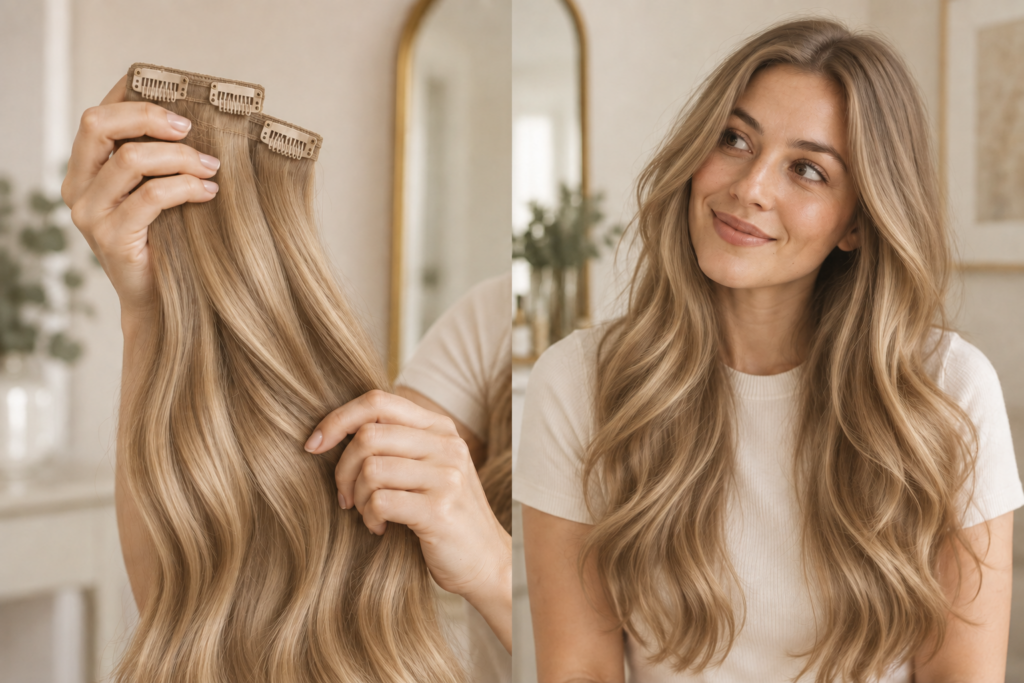
This is often the deciding factor for buyers. If you like to change your hairstyle regularly, curl your hair for events, straighten it for work, or switch between textures, human hair extensions give you that freedom. You can style them alongside your natural hair using the same tools and techniques your stylist already recommends.
Synthetic extensions are generally set in one style. Many come pre-styled straight, wavy, or curly, and that style is essentially permanent for the life of the piece. Once exposed to high heat or repeated washing, synthetic fibers can lose their texture, become frizzy, or develop a texture that looks less natural, and this damage cannot be reversed.
Blending With Your Natural Hair
Human hair extensions tend to blend more convincingly with natural hair because they move, catch light, and respond to humidity in a similar way. This is especially important for methods worn close to the scalp, such as tape-ins, I-tips, or K-tips, where a seamless blend depends on matching texture and movement as well as color.
Synthetic hair often has a slightly different sheen or a more uniform, less organic movement. This can be less noticeable in clip-in styles used occasionally for length or volume, but it becomes more apparent in longer-term or semi-permanent installations where the extensions are meant to pass as your own hair every day.
Durability and Lifespan
Human hair extensions, when cared for properly, generally last longer and tolerate more handling over time. They can be washed, conditioned, and styled repeatedly without breaking down the way synthetic fibers do. That said, lifespan always depends on the quality of the hair, how it was installed, and how consistently you follow a proper care routine, including gentle washing, appropriate brushing, and protecting the hair from unnecessary heat and friction.
Synthetic extensions typically have a shorter usable life. Repeated wear, washing, and exposure to heat or the sun can cause the fibers to tangle, dull, or degrade faster than human hair. For occasional-use clip-ins meant for a few wears, this may be an acceptable tradeoff. For anyone planning to wear extensions regularly, synthetic hair often needs replacing more frequently.
Cost Considerations
Synthetic extensions are usually less expensive upfront, which can make them appealing for one-time events or short-term use. Human hair extensions carry a higher initial cost because of sourcing, processing, and the quality control required to keep the cuticle intact and the color consistent. Many customers find that the higher upfront investment in human hair pays off through better styling versatility, a more natural look, and a longer usable lifespan, but the right choice ultimately depends on your budget, how often you plan to wear extensions, and how important heat styling flexibility is to you.
Care Requirements Differ Too
Human hair extensions benefit from the same general care principles as natural hair: sulfate-free shampoo, regular conditioning, careful detangling, and protection from excessive heat or friction, especially at night or while swimming. Synthetic extensions require different care, often involving specific synthetic-safe products and cooler water, and they generally cannot be treated with oils, heat tools, or styling products designed for natural hair without risking damage to the fibers.
If you are unsure which category a specific product falls into, checking the product description carefully or asking directly before purchasing is worthwhile. Mixing up care routines between the two types is one of the most common reasons extensions wear out faster than expected.
Which Option Makes Sense for You
If you want extensions that can be curled, straightened, colored alongside your natural hair, or worn long-term with a natural blend, human hair is typically the more practical choice, particularly for tape-in, weft, I-tip, or K-tip methods installed by a professional. If you need a low-cost, occasional-use option for a single event and do not need heat styling, synthetic extensions may serve that limited purpose.
Because suitability also depends on your natural hair type, styling habits, and how the extensions will be installed, it is worth discussing your goals with a qualified stylist before committing to a method or material. You can also browse human hair options in the Locks n Lure Hair shop to compare textures, lengths, and installation methods suited to your lifestyle.
Final Thoughts
Choosing between human hair and synthetic hair extensions is really a question of how you plan to wear and style your extensions over time. Human hair offers styling freedom, a more natural blend, and generally longer usable life, while synthetic hair offers a lower-cost, limited-use alternative with far less flexibility. Understanding these differences upfront helps you set realistic expectations and avoid disappointment, whether you are buying your first set of extensions or upgrading from a previous purchase.

