Hair Extensions for Weddings and Special Events: A Complete Planning Guide
Weddings, galas, proms, and milestone celebrations all come with one shared expectation: your hair needs to look its absolute best, and it needs to hold up for hours of dancing, photos, and hugging every relative you own. Hair extensions can help you achieve fuller, longer, more photo-ready hair for these occasions, but the method you choose and how far in advance you plan can make a big difference in how comfortable and natural the results feel. This guide walks through what to consider before your big day, whether it is your own wedding or someone else’s.
Why Extensions Are Popular for Special Occasions
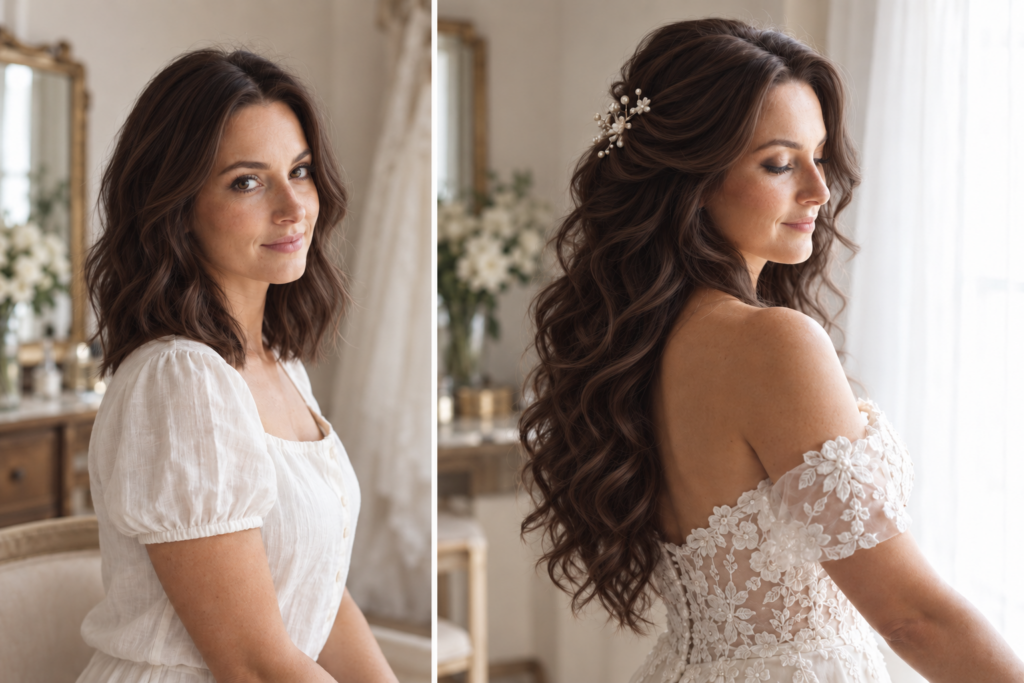
Special events often call for updos, curls, or intricate styles that require extra length or volume to hold their shape. Extensions can add fullness for a voluminous blowout, provide length for a low bridal bun, or simply give a stylist more hair to work with when creating a complex braid or half-up style. Many people who do not wear extensions daily still choose them for a single event because the payoff in photos and video can be significant.
That said, extensions are not a requirement for a great occasion hairstyle. Whether they make sense for you depends on your natural hair thickness, the style you want, and how much time you have to prepare. A consultation with a qualified stylist is the best way to figure out what will actually work for your hair and your chosen look.
Choosing the Right Method for a One-Time Event
If you only need extensions for a single day, temporary clip-in wefts are usually the simplest option. They install in minutes, require no adhesive or heat bonding, and come out just as easily once the event is over. Clip-ins are a practical choice for proms, holiday parties, photo shoots, or any occasion where you want extra length or volume without a multi-week commitment.
If your event is part of a longer season of appearances, such as engagement photos, a bridal shower, and the wedding itself spread across several weeks, a semi-permanent method like tape-ins, I-tips, or K-tips might make more sense. These methods stay in for an extended period and can be styled repeatedly without reinstalling extensions each time. Weft and genius-weft methods are another option worth discussing with your stylist, particularly if you want a flatter, more seamless base for an updo.
Matching Your Hairstyle to the Right Extensions
The style you have in mind should guide the type of extensions you choose. A few general principles:
- Loose curls or waves often look best with extensions that blend well in texture and have enough length to move naturally.
- Updos and braided styles typically require extensions that lie flat at the root, which is why many stylists prefer tape-ins or wefts for these looks.
- Half-up styles or added volume at the crown may only need a few clip-in wefts rather than a full set.
- Sleek, straight styles show off length and blending quality, so color matching and strand quality matter even more.
Bring photos of your desired hairstyle to your consultation. A stylist can tell you whether your natural hair, combined with extensions, can realistically achieve that look, or whether adjustments are needed.
Timing: When to Book Your Extensions
Timing depends heavily on the method:
- Clip-ins: These can typically be ordered and tried on well in advance, since there is no installation appointment required. Many people order a few weeks ahead to allow time for color matching and a practice run at home.
- Tape-ins, I-tips, or K-tips: These require a professional installation appointment, which should be booked several weeks before the event to allow time for the hair to settle and for any adjustments if needed. Avoid installing extensions the day before a major event in case you need time to adjust to wearing them.
- Trial runs: If your event involves an updo or a complex style, schedule a hair trial with your stylist before the actual day. This lets you confirm the extensions blend well, hold the intended style, and feel comfortable for extended wear.
Booking early also gives you time to browse options and compare methods, lengths, and colors calmly rather than under time pressure.
Color Matching for Photos and Video
Special events are documented extensively, often in a mix of natural light, flash photography, and video. Extensions that look well matched in person can sometimes photograph differently under certain lighting. If color matching is a concern, ask your stylist to check the blend in different lighting conditions, and consider bringing a friend or family member to check the back and crown areas you cannot see easily yourself.
Comfort During Long Events
Weddings and formal events often mean many hours of wear, from getting ready in the morning through dancing late into the night. A few practical tips:
- Choose a weight and volume that feels comfortable for extended wear rather than the heaviest option available.
- If your updo will be pinned tightly, discuss with your stylist how the extensions will be secured so they do not shift or pull throughout the day.
- Bring a small kit with bobby pins and a travel-size dry shampoo in case any touch-ups are needed later in the event.
Removing Extensions After the Event
For clip-ins, removal is straightforward and can be done at home the same night. For semi-permanent methods like tape-ins or K-tips installed specifically for a wedding season, plan a removal appointment with your stylist once your run of events is complete, especially if you do not plan to continue wearing extensions long term. Attempting to remove bonded or taped extensions yourself can risk damage to your natural hair, so professional removal is generally the safer route.
Preparing for Your Big Day
Hair extensions can be a great tool for achieving the fuller, more elaborate hairstyles many people want for weddings and special events, but success depends on choosing the right method, timing your installation appropriately, and working closely with a stylist who understands both the extensions and your natural hair. If you are shopping for options to try before your event, browsing a range of extension methods and lengths can help you get a feel for what might work, and reaching out through the contact page is a good next step if you have questions about matching color or choosing a method for your specific style.

