
Russian Hair vs. Asian Hair Extensions: Understanding the Real Differences
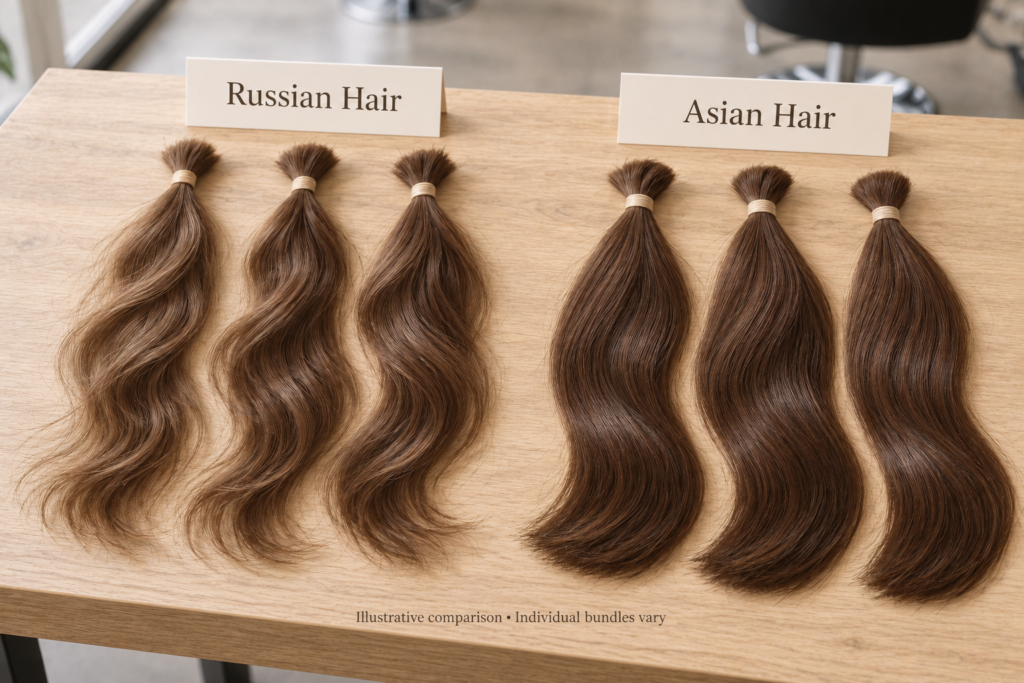
When you start researching hair extensions, you will quickly run into terms like Russian hair and Asian hair. These labels describe more than geography. They point to real differences in texture, cuticle structure, and how the hair behaves once it is installed. Understanding these differences can help you choose extensions that blend naturally with your own hair and hold up well over time.
This guide breaks down what Russian hair and Asian hair extensions actually are, how they compare, and which situations tend to favor one over the other.
What Is Russian Hair?
Russian hair extensions are typically sourced from donors in Eastern Europe and Russia. This hair is prized for its fine diameter, soft texture, and naturally light color range, which often includes blondes and light browns without heavy chemical processing. Because the hair strands tend to be thinner, Russian hair can create a lightweight feel even in longer lengths, which some wearers find more comfortable for everyday use.
Russian hair is usually collected as single donor ponytails, meaning all the cuticles run in the same direction from root to tip. This alignment matters because it reduces tangling and matting over the life of the extensions. The trade off is that authentic Russian hair is harder to source in large volumes, which is part of why it tends to carry a higher price point.
What Is Asian Hair?
Asian hair extensions, often sourced from countries like China, India, or Vietnam, tend to have a thicker strand diameter and naturally dark pigmentation. This hair is strong and holds styling well, but it often requires more processing to achieve lighter shades or to soften the texture for a natural blend with fine or medium hair types.
Asian hair is widely available, which generally makes it more budget friendly. Quality varies significantly depending on how the hair is collected and processed, so cuticle alignment and remy status are worth confirming before you buy. Non-remy hair, where cuticles are not aligned, is more prone to tangling regardless of origin.
Comparing Texture and Feel
The most noticeable difference between Russian and Asian hair is texture. Russian hair is fine and soft, often compared to naturally healthy European hair. It tends to blend seamlessly with thinner or finer natural hair types.
Asian hair is naturally thicker and can feel coarser, especially before any processing. For people with thick or coarse natural hair, this can actually be an advantage since the extensions match density more closely. For those with fine hair, unprocessed Asian hair may feel heavier or less seamless unless it has been specially treated to reduce thickness.
Durability and Longevity
Both hair types can last a long time when they are remy quality and properly cared for. Russian hair’s fine, uniform strands and minimal processing often mean it retains its softness through repeated washing and styling. Asian hair, particularly when heavily processed to lighten or soften it, may show wear sooner if it is not cared for with gentle, sulfate free products and moderate heat.
Regardless of origin, lifespan depends heavily on your care routine, how often you wash and heat style, and whether the extensions were properly maintained between wears. Reviewing general hair extension care guidance can help you get the most life out of either hair type.
Color and Processing Considerations
Russian hair’s naturally lighter base makes it easier to achieve blonde and light brown shades without extensive bleaching, which helps preserve the hair’s structural integrity. Asian hair, being naturally darker, often needs more intensive processing to reach lighter tones. Heavier processing can affect how soft and resilient the hair feels over time, so if you are set on a lighter shade, it is worth asking your supplier or stylist how the hair was treated to reach that color.
Which One Should You Choose?
There is no universal right answer. The better choice depends on your natural hair texture, desired color, budget, and how you plan to style and maintain your extensions.
- If you have fine or medium hair and want a soft, seamless blend, Russian hair is often a strong match.
- If you have thicker or coarser natural hair, Asian hair may blend more naturally and offer good value.
- If you want light blonde tones with minimal processing, Russian hair typically requires less chemical treatment to get there.
- If budget is a primary concern, Asian hair extensions are generally more accessible while still offering quality options at the remy level.
It is also worth noting that some suppliers blend hair types or offer hybrid options, so the labels are not always a strict either or choice. Reading product descriptions carefully and asking questions before purchasing will help you understand exactly what you are getting.
Getting Personalized Guidance
Because so much depends on your individual hair type, color goals, and lifestyle, it is worth having a conversation with a stylist or extension specialist before committing to a specific hair origin or method. A professional can assess your natural hair density, porosity, and color to recommend an option that will blend well and hold up to your routine.
If you are ready to compare options directly, browsing the Locks n Lure Hair shop is a good next step, or you can reach out through the contact page with specific questions about texture, color matching, or installation methods. Whether you lean toward Russian hair or Asian hair extensions, choosing quality remy hair and following proper care practices will do the most to keep your extensions looking natural and lasting well over time.

