
Clip-In Hair Extensions: A Complete Guide for First-Time Buyers
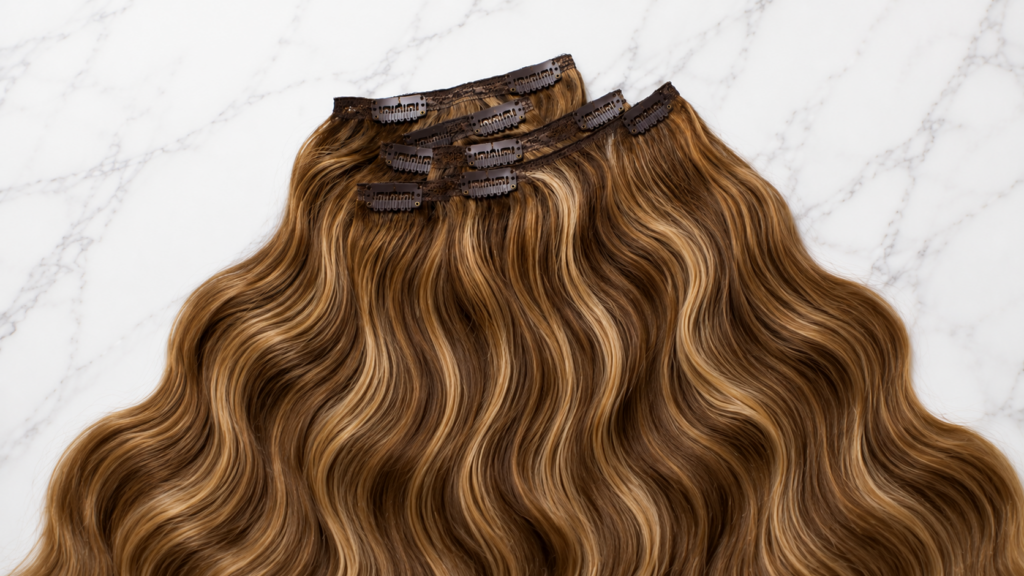
Clip-in hair extensions are one of the easiest ways to add length, volume, or fullness without a long-term commitment. If you are considering your first set, understanding how they work and how to choose the right one can help you get natural-looking results that fit your lifestyle. This guide walks through the basics so you can shop with confidence.
What Are Clip-In Hair Extensions
Clip-in hair extensions are wefts of hair with small clips sewn along the top edge. Each weft snaps onto a section of your natural hair near the roots, distributing weight evenly across your head. Unlike tape-in, I-tip, or K-tip methods, clip-ins are not bonded or sewn into your hair. This makes them fully temporary. You put them in when you want extra length or volume and remove them at the end of the day or before bed.
Because they require no adhesive, heat, or salon appointment to install, clip-ins are often the first extension method people try. They also give you flexibility to change your look for a special event without a lasting change to your natural hair.
Who Clip-In Extensions Work Best For
Clip-ins suit a wide range of hair types and goals, including people who:
- Want extra length or volume occasionally rather than every day
- Prefer a method they can put in and take out themselves
- Are not ready for a semi-permanent method like tape-ins or K-tips
- Want to test a longer or fuller look before committing to a more involved installation
- Need a flexible option for travel, photos, or special occasions
If you have very fine or thin natural hair, lighter-weight wefts with smaller clips tend to feel more comfortable and blend more smoothly. A stylist can help you evaluate your hair density and recommend a set that will not feel heavy or pull at the roots.
Choosing the Right Length and Volume
Clip-in sets typically come in a range of lengths, so the first decision is how much added length you want compared to your natural hair. A subtle blend usually looks best when the extensions are close to your existing length, while a dramatic change may require a longer set with careful layering during application.
Volume matters just as much as length. If your goal is fuller-looking hair rather than added length, look for sets described as full or double-wefted, which contain more hair per weft. If you mainly want length with a natural amount of volume, a lighter set may blend more easily, especially at the crown and part line.
Because hair type, natural thickness, and desired style all affect which length and volume will look best, it can help to browse a range of options or ask a stylist for guidance before choosing a set. You can view current lengths and volume options in the Locks n Lure Hair shop.
Matching Color and Texture
A seamless clip-in look depends heavily on color and texture matching. Even a well-made set will look obvious if the shade is too light, too dark, or the wrong undertone for your natural hair. If your hair has highlights, balayage, or multiple tones, you may need a slightly more nuanced match or a set that blends multiple shades within the wefts.
Texture matters too. Straight extensions on naturally wavy or curly hair (or the reverse) can create a mismatched look unless you are willing to style both to match. If you are unsure which shade or texture will blend best with your hair, reaching out for guidance before purchasing can save time and help you avoid returns. The Locks n Lure Hair team can help point you toward options suited to your coloring and texture.
How to Put In Clip-In Extensions
While application varies slightly by set, the general process includes:
- Sectioning your hair horizontally, starting near the nape of the neck
- Backcombing the root area slightly to give the clips something to grip
- Snapping each weft into place, working from the bottom of your head upward
- Blending the top layers of your natural hair over the topmost wefts to hide the clips
- Styling everything together with a brush, curling iron, or flat iron as needed
Most people find the process becomes quicker with practice. If you are new to extensions, doing a trial run before an event gives you time to adjust placement and get comfortable with the technique.
Caring for Clip-In Extensions
Because clip-ins are removable, they generally need less frequent washing than semi-permanent methods, but they still require regular care to stay soft and tangle-free. Brush them gently before and after wear, store them properly when not in use, and avoid sleeping or showering in them since repeated friction and moisture can cause tangling and shorten their lifespan. Following the care instructions provided with your specific set will help you get the most wear out of them over time.
Clip-Ins Versus Semi-Permanent Methods
Clip-in extensions are best understood as a temporary styling tool rather than a long-term hair solution. Methods like tape-ins, I-tips, or K-tips are installed by a professional and worn continuously for weeks between maintenance appointments. If you want extensions you do not have to put in and take out daily, a semi-permanent method installed by a qualified stylist may be a better fit. If flexibility and control matter more to you, clip-ins remain one of the simplest ways to change your look on your own schedule.
Final Thoughts
Clip-in hair extensions offer an approachable way to experiment with length and volume without a long-term commitment. Choosing the right length, volume, color, and texture makes the biggest difference in how natural the final result looks, so take time to evaluate your natural hair before selecting a set. If you have questions about which option suits your hair type or styling goals, the team at Locks n Lure Hair is available to help, and you can also explore additional guidance in our hair extension blog as you continue researching the right method for you.

